
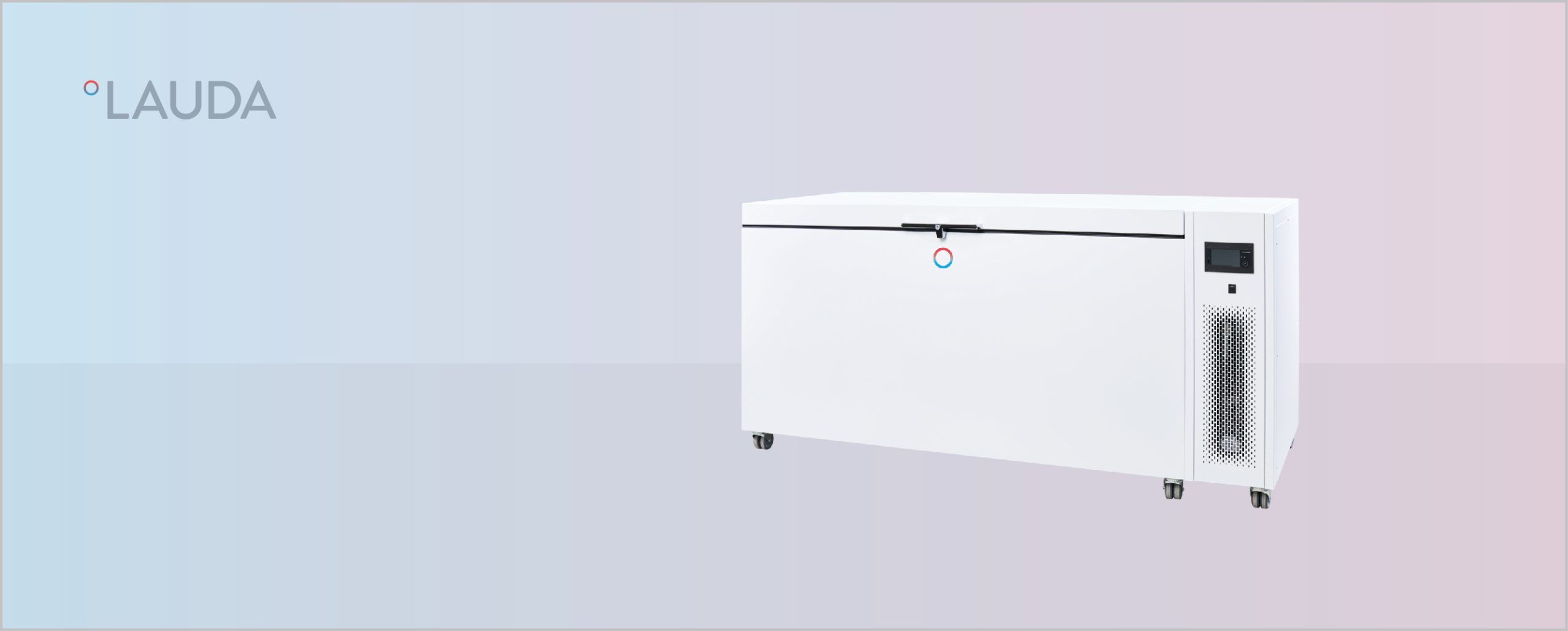

Versafreeze Chest Freezers
The LAUDA Versafreeze Chest Freezers, developed by LAUDA, are high-performance ultra-low temperature (ULT) storage systems designed for the secure preservation of sensitive laboratory samples. These chest freezers provide reliable and stable temperature conditions for long-term storage of biological materials, pharmaceutical products, and research samples that require extremely low temperatures.
The Versafreeze chest freezer series is engineered for laboratories and research facilities that require high storage capacity, excellent thermal stability, and energy-efficient operation. The horizontal chest design ensures minimal cold air loss during lid opening, improving temperature stability and energy efficiency compared to upright freezers.
Overview
The LAUDA Versafreeze Chest Freezers combine:
• Ultra-low temperature storage capability
• High storage capacity for laboratory samples
• Energy-efficient refrigeration technology
• Advanced digital temperature control and monitoring
• Robust insulated cabinet design
• Reliable long-term sample preservation
These freezers are specifically designed to maintain stable ultra-low temperatures over extended periods, protecting valuable biological and research materials from degradation.
Technical Specifications
(Specifications may vary depending on the specific Versafreeze chest freezer model.)
Temperature Range
• Operating temperature range: approximately –40 °C to –86 °C
Temperature Stability
• High-precision electronic temperature control
• Designed to maintain stable internal temperature conditions for long-term storage
Cooling System
The Versafreeze chest freezers utilize advanced cascade refrigeration technology, ensuring reliable ultra-low temperature performance.
Key features include:
• High-efficiency compressors
• Optimized refrigeration circuit
• Rapid temperature recovery after lid opening
• Continuous stable cooling for long-term storage
Storage Capacity
The chest freezer configuration allows large sample storage volumes, making it suitable for laboratories that require extensive storage capacity.
Interior organization includes:
• Removable storage baskets
• Flexible sample arrangement
• Efficient use of storage space
Interior Construction
• Durable internal chamber
• Designed for easy cleaning and maintenance
• Optimized airflow for uniform temperature distribution
Insulation
• High-performance thermal insulation
• Designed to minimize temperature fluctuations
• Improves energy efficiency and sample protection
Electrical Specifications
• Designed for laboratory electrical standards
• Suitable for continuous 24/7 operation
Control & User Interface
The Versafreeze chest freezers feature a modern digital control and monitoring system.
Key control functions include:
• Digital temperature display
• Temperature set-point adjustment
• Continuous monitoring of internal temperature
• System diagnostics and operational status display
• Alarm and safety notifications
The intuitive interface allows laboratory staff to easily monitor and manage freezer operation.
Safety Features
To ensure maximum protection of stored samples, the Versafreeze chest freezers include multiple safety mechanisms:
• High temperature alarm
• Low temperature alarm
• Power failure alarm
• Lid-open alarm
• Sensor failure monitoring
• Visual and acoustic alarm signals
• Optional remote alarm systems
These safety systems help ensure the integrity and protection of valuable samples.
Design & Construction
The Versafreeze chest freezer series is engineered for durability and long-term laboratory use.
Key design characteristics include:
• Horizontal chest freezer configuration
• Heavy-duty insulated cabinet
• Efficient lid sealing system
• Low-noise refrigeration operation
• Designed for continuous operation
The chest configuration also reduces cold air loss during opening, contributing to improved temperature stability.
Typical Applications
LAUDA Versafreeze Chest Freezers are widely used in:
• Biomedical research laboratories
• Biotechnology and life science laboratories
• Pharmaceutical research and production facilities
• Clinical laboratories and hospitals
• Environmental and food testing laboratories
• Universities and research institutions
Typical stored materials include:
• DNA and RNA samples
• Biological tissues and specimens
• Cell cultures
• Vaccines and pharmaceuticals
• Enzymes and reagents
• Chemical samples requiring ultra-low temperatures
Key Advantages
• Ultra-low temperature storage capability
• High storage capacity for laboratory samples
• Excellent temperature stability
• Energy-efficient refrigeration technology
• Secure storage conditions for sensitive materials
• Advanced monitoring and alarm systems
• Durable laboratory-grade construction
• Manufactured by a globally recognized temperature control specialist